

High Plains regional news
-
 The title is currently held by former Gov. Rick Perry.
-
 U.S. Senate candidate Adam Hamilton (D-KS) met with voters on his campaign bus tour in Liberal, Kansas.
-
 The records dispute comes just days before the Nov. 3 midterm elections. Gov. Greg Abbott is seeking a fourth term against his Democratic challenger, state Rep. Gina Hinojosa of Austin.
-
 Oklahomans will vote in dozens of national, statewide and local races – and decide on two state questions – this midterm election. Here is a preview of key items on the Nov. 3 ballot.
-
 Legislators criticize university president’s handling of announcement and question budgeting


Happenings across the High Plains


Regional Features
-
 H.C. White Company, 1903. No known restrictions. Library of Congress Prints & Photography DivisionWelcome to Poets on the Plains, I’m Brad Aaron Modlin. This poem is by Rayni K. Wekluk. Let’s start with the title: “The Railroad Brought Us Here.” Us as collective—the inhabitants who arrived to The Great Plains in train cars.
-
 Charles Marion Russell, Public domain, via Wikimedia CommonsFor High Plains Public Radio Readers Book Club, I'm Shane Timson in Colby, Kansas. Today we're talking about the book The Children's Blizzard, by David Laskin. This is about the 1888 blizzard. It affected three states, Nebraska, South Dakota, and Minnesota.
-
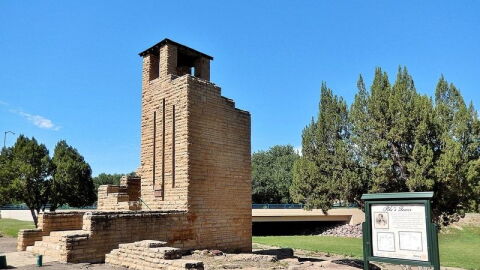 aterry/HMdb.org PhotoID=912790/https://www.hmdb.org/m.asp?m=289663When the Jeffersonian explorer Zebulon Pike undertook his Southwest Expedition in 1806, he went in search of the headwaters of the Arkansas River and the Red River. His trek brought him from the area of St. Louis through the Kansas plains, and into Southeastern Colorado. He camped on Willow Creek, near present day Lamar, at a place that has since been designated a community park.
-
 Internet Archive Book Images, No restrictions, via Wikimedia CommonsIn The Children’s Blizzard, David Laskin seeks to unpack the complex history of Anabaptist emigration to the Great Plains and the eventual tragedy of the 1888 blizzard, which took the lives of hundreds of people, many of them children. There are many points where Laskin might impart some sense of cosmic morality to these events, such as when he repeatedly notes that the land that lured these settlers from their Mennonite communities in Europe had been violently seized from the Indigenous peoples who had inhabited it for millennia by the U.S. military and railroad companies.


NPR Top Stories

Paula Bronstein/for NPR
Artificial intelligence is making drones faster and more capable. Russia and Ukraine both use AI-powered drones, and Ukrainian President Volodymyr Zelenskyy has warned that AI could lead decisions on the battlefield as soon as next year.

Allison Robbert
/
AP


Charlie Neibergall
/
Getty Images


Leave a legacy of public radio for your community and the High Plains region


